All Categories
Featured
Table of Contents
- – OCRV Center
- – Understanding Your RV Roof Repair Options Near Me
- – Breaking Down Sealants and Coatings for RV Roofs
- – When Full RV Roof Replacement Makes Sense
- – Direct Cost Comparison: Sealants vs Full Repla...
- – Pros, Cons, and Decision Framework
- – Preventing Future RV Roof Problems
- – Real Owner Experiences and Outcomes
- – Why Choose a One-Stop Shop for RV Roof Repair ...
- – We Can Help! Contact Us Today
- – Frequently Asked Questions About RV Roof Repai...
- – OCRV Center
RV roof repair near me turns into an urgent need the instant owners spot first indicators such as water marks on ceilings, drips during rain, or soft roof areas hinting at water intrusion. Protective sealants and coatings offer a practical budget-friendly repair method by depositing protective barriers over the present membrane to seal seams again, strengthen weak points, and prolong roof service life without complete stripping. Full replacement, by contrast, strips away the old covering, examines and repairs the substrate, and places a new membrane to rebuild structural soundness from the ground up. These two solutions successfully address leaky RV roof problems, but the correct choice relies on the real degree of deterioration, the specific roof material involved (such as EPDM, TPO, or fiberglass), available budget, and intended longevity. This thorough guide compares sealants and full replacement directly—including cost breakdowns, installation sequences, pros and cons, long-term outcomes, and effective prevention strategies—so RV owners make informed decisions and avoid the steep secondary expenses that occur due to postponed roof maintenance.
Water damage ranks as one of the leading and highest-cost dangers RV owners encounter, frequently escalating from tiny breaches into extensive inside damage, mold growth, electrical issues, and compromised framing if left unaddressed (Rv Rubber Roof Maintenance Brea). Qualified roof service prevents this advancement quickly, protects the RV's complete state, and supports stronger resale prices. RV owners who act on roof problems promptly enjoy significantly lower worry and substantially reduced surprise breakdowns compared to those who postpone action until evident rot or significant framing damage forces emergency intervention. Service data consistently demonstrates that routine roof attention cuts major water-related repair claims dramatically over the vehicle's lifespan
Understanding Your RV Roof Repair Options Near Me
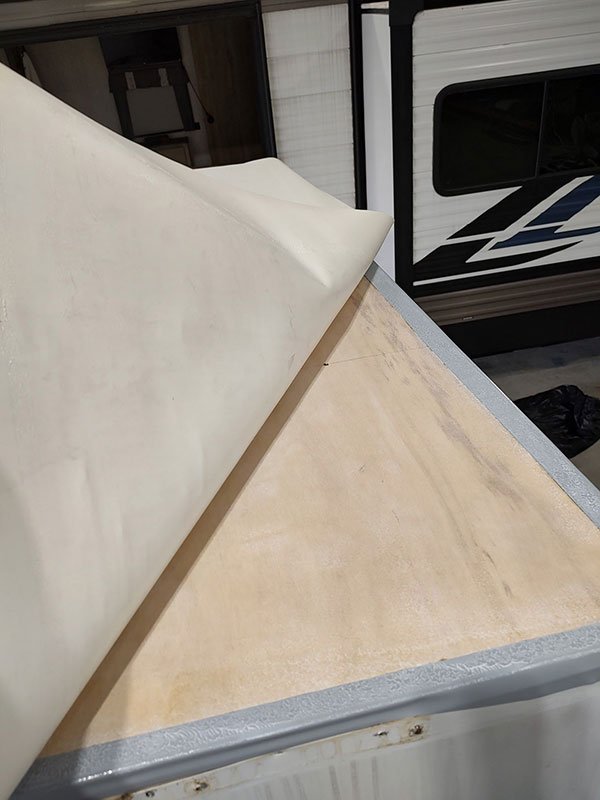
Owners typically launch RV roof repair near me searches when first clues appear after exposure to elements or basic visual examinations. Interior leaks manifest as lasting dark marks, blistering surfaces, or discolored ceiling panels, frequently located near vents, seams, skylights, or air conditioning units. Yielding sections felt underfoot on the floor or when pressing the roof exterior signal intrusion into the plywood decking and initiating structural weakening. Deteriorated, cracked, or gone sealant along edges, corners, and all roof penetrations lets water penetrate, particularly after repeated heating and cooling cycles. These warning signs rarely remain isolated—water migrates horizontally and vertically, encouraging mold development, soaking insulation materials, damaging electrical components, and compromising framing if left unattended.
Immediate action to these early clues safeguards ongoing use and future resale worth. Delayed action often causes follow-up fixes—interior refinishing, electrical system fixes, mold treatment—that frequently outstrip the cost of initial roof work by multiple factors. Regular visual checks and quick professional review convert looming disasters into routine maintenance events. Those who act on first indications feel considerably reduced worry, reduced vehicle out-of-service time, and greater confidence during travel seasons. RV repair statistics indicate proactive roof care reduces severe water-damage incidents substantially compared to reactive approaches.
Spotting early indicators gives control—connect with specialists for a complimentary inspection to catch issues before they escalate. To learn more about roof solutions, review our in-depth RV roof repair resource.
Breaking Down Sealants and Coatings for RV Roofs
Sealants and coatings function as the first-line method for most RV roof repair near me scenarios where deterioration remains confined to the top covering, failed caulking, or small punctures without underlying substrate compromise. These coating systems integrate completely to the existing surface, establishing an unbroken water-resistant layer that closes vulnerable seams and delivering robust defense against sun damage, heat and cold cycles, and light mechanical impacts. Silicone RV roof coating stands out for its remarkable stretch capability and crack resistance across broad thermal conditions, rendering it particularly suitable in areas of high UV intensity or frequent weather shifts. Acrylic formulations deliver reliable stick on multiple surfaces and simpler re-coating during later service visits. Hybrid reinforced systems intersperse polyester fabric layers between coating applications, substantially increasing tear strength—well-suited for roofs facing tree limbs, periodic hail events, or debris buildup during parking or transit.
Qualified service uses a structured procedure created to achieve maximum stick and service life. First step pressure cleaning along with hand scrubbing eliminates oxidation, debris and residue, existing caulk, and all loose debris that would compromise attachment. Professionals next repair evident cracks and separations, add primer where indicated, and systematically roll or spray even coats to guarantee complete coverage, with particular attention paid to edges, corners, and fixtures including vents, antennas, solar mounts, and fixtures. Curing periods extend from hours to days according to weather conditions and product requirements, after which thorough flood testing or pressure verification confirms a fully watertight barrier. Most expert applications conclude within one to two working days, allowing owners to resume normal use with minimal schedule disruption.
Realistic durability typically spans five to ten years under typical operating conditions, though harsh sun, temperature extremes, road wear, or severe climates may reduce that timeframe. Scheduled annual inspections spot developing wear soon, plus minor reapplications during upkeep extend peak performance significantly. Costs typically fall in the $800–$3,500 range, based on roof size, prep work, material quality, and reinforcement needs. Properly executed professional coatings prove effective at lowering leak frequency compared to untreated or inadequately maintained roofs, according to RV service industry performance records.
These solutions deliver effective, established safeguarding for many roofs—contact us for a no-obligation quote tailored to your RV’s needs. Discover additional upkeep information in our RV maintenance section.
When Full RV Roof Replacement Makes Sense
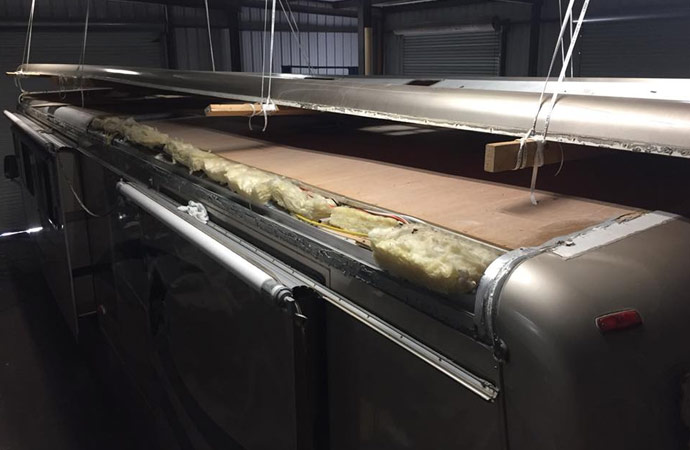
Total roof renewal becomes required when in-depth assessment discovers issues reaching into the substrate. Widespread dry rot within plywood decking, major delamination between layers, or multiple failed sealants after prior attempts indicate coatings deliver just temporary containment while hidden deterioration continues. Retaining compromised decking in such cases creates ongoing moisture trapping, accelerating mold colonization, insulation degradation, and eventual safety issues from weakened framing during highway travel.
Current replacement processes employ cutting-edge products tailored to RV requirements. TPO provides superior heat reflection, resisting chemical exposure, and maintaining low weight contributing to improved mileage on long hauls. PVC membranes enable heat-welded seams ensuring top waterproof performance and outstanding puncture and abrasion resistance. Fiberglass roofs demand accurate contour replication to preserve original aerodynamic profiles and structural characteristics. The entire workflow begins with safe removal of the old membrane, complete deck evaluation, fixing or replacing compromised plywood, potential insulation improvement, and careful placement of fresh covering with strengthened sealing at every penetration point—vents, skylights, antennas, solar arrays, air conditioners, and edge terminations.
Benefits go far beyond stopping leaks—replacement rebuilds full structural soundness, eradicates trapped moisture, and offers long-term low-maintenance durability under standard operating conditions. Enhanced thermal performance frequently results from better insulation during rebuild during reconstruction. Properly recorded new roofs increase resale appeal and market value during resale evaluations. Owners consistently describe the post-replacement experience as experiencing a revitalized, confident RV prepared for ongoing travel free from roof worries.
Complete replacement restores the base when required—arrange a professional evaluation to confirm the right path forward. See examples of similar work in our photo gallery.
Direct Cost Comparison: Sealants vs Full Replacement
Pricing stands among the top factors of decision-making for RV roof repair near me inquiries. Sealants and protective coatings typically range from $800–$3,500 on typical RVs. This figure incorporates thorough prep work, top-tier materials, certified technician time, and concluding tests. Lower pricing applies when size is small or prep is minimal, increased amounts result from larger roofs, significant prep work, crack repairs, or hybrid reinforcement.
Complete roof replacement projects typically range from $4,000–$12,000. The figure includes RV dimensions, membrane choice, deck repair needs, labor for safe removal and precise reinstallation, and specialized sealing needs. Site access challenges, including difficult locations or height issues, can adjust the final amount. Repair provider data frequently demonstrate that untreated roof issues frequently cause secondary interior, electrical, and structural repairs often exceeding $5,000–$15,000, underscoring the economic wisdom of dealing with roof problems before escalation.

Lifetime cost evaluation clearly supports picking the solution that precisely matches documented damage levels. Coatings provide instant cost savings and solid long-term safeguarding when applied to sound decking. even with higher initial expense, stops ongoing repair needs and safeguards against expensive secondary issues that can surpass the first investment significantly. Open, breakdown quotes from seasoned professionals eliminate surprises and match cost expectations with proven performance.
Years of direct knowledge and recognized credentials support exact cost prediction and work—delivering logical cost control and emotional relief from uncertainty. Compare our approach with other options on our RV roof repair page.
Pros, Cons, and Decision Framework
Weighing RV roof coating vs replacement pros cons reveals distinct advantages for each method. Coatings install quickly—often in one day—demand much less upfront cost, and offer quick waterproofing while additionally boosting defense to UV breakdown and weather exposure. They excel for ongoing maintenance plans or when base structure stays solid. The principal constraint surfaces when hidden rot, delamination over large areas, or repeated prior sealant failures already exist; sealants in such cases might mask rather than correct the core problem, potentially resulting in recurrence and escalating total costs.
Full replacement delivers complete, enduring fix by actively addressing underlying issues in the base. removes trapped moisture, totally renews structural capability, and provides longest durability with reduced long-term care. Main trade-offs involve higher upfront cost and extended project duration, although offset by dramatically reduced lifetime maintenance demands, superior overall vehicle reliability, and enhanced resale marketability.
A reliable selection method commences with professional inspection—carefully testing for weak sections, thorough examination of all entry points, and carefully recording findings. Combine those results with individual travel habits (constant residency vs occasional trips), prevailing climate conditions, and cost considerations to identify the best option. This systematic method removes guesswork from decisions and guides owners to the solution that delivers optimal protection, worth maintenance, and peace of mind.
This framework removes guesswork—obtain expert input with a complimentary consultation. Explore our full RV service offerings for related needs.
Preventing Future RV Roof Problems
Consistent application of RV roof maintenance tips and forward-thinking approaches to prevent RV roof leaks permanently prioritizes consistent attention over crisis response. Suggested check schedules cover biannual visits with extra pre-travel inspections, facilitating discovery of emerging deterioration at the earliest stages. Thorough cleaning removes accumulation from low spots, seams, and drainage channels, and careful inspection of caulk status on penetrations and borders highlights sections for quick action before breakdown happens. Careful firmness checks over the whole area finds soft or yielding zones that indicate beginning base problems warranting closer professional evaluation.
Regular oversights that hasten degradation skipping planned sealant maintenance, using incompatible or inferior sealants that break down quickly, or overlooking tiny cracks expanding from thermal cycling. Accumulated debris forms ongoing moisture pockets. Excessive walking causes gradual micro-tears. Strategic parking under protective cover during severe weather minimizes contact to falling limbs and sticky sap accumulation. High-quality protective layers applied during routine maintenance visits offer substantial further safeguarding against ultraviolet degradation and environmental weathering forces.
Forward-thinking routines extend roof life significantly—expert guidance ensures nothing is overlooked. Learn more about protection on our RV maintenance section.
Real Owner Experiences and Outcomes
Those handling RV roof repair near me requirements often describe very similar journeys. A motorhome owner based in Anaheim identified growing ceiling marks after prolonged rain and selected professional coating application. The application sealed every vulnerability and stopped additional water entry, avoiding mold growth and supporting ongoing travel without breaks. “The quick service ended our persistent anxiety about interior water damage,” the owner shared in later review.
A trailer owner in Irvine encountered severe delamination and rot on their fifth wheel. Complete renewal eliminated ongoing leaks fully and revived interior to original quality. “It gave instant worry-free feeling—no more anxiety during rainstorms,” the owner stated. Another from Huntington Beach involved a travel trailer with repeated seam failures. Focused reinforcement extended usability greatly without requiring full removal. “We regained confidence in the vehicle for long-distance trips,” the owner commented. These experiences illustrate the substantial relief and dependable performance that arise from professional, structured roof renewal.
These genuine experiences reflect the peace of stress-free use and the sound security of long-lasting, professional service. Check out parallel cases in our testimonials.
Why Choose a One-Stop Shop for RV Roof Repair Near Me
Selecting a one-stop facility significantly eases RV roof repair near me by managing interrelated fixes within a unified process. Leaks frequently influence electrical, insulation, cabinetry, flooring, seats, and interior elements—fixing all affected areas simultaneously avoids timing problems, overlapping work, and the risk of incomplete or mismatched work. This integrated methodology substantially reduces total vehicle downtime and decreases the risk of ignored additional problems that could lead to extra charges in the future.
Our reach includes across Southern California, encompassing Anaheim, Santa Ana, Irvine, Huntington Beach, Garden Grove, Fullerton, Orange, Costa Mesa, Mission Viejo, Westminster, Newport Beach, Buena Park, Lake Forest, Tustin, Yorba Linda, Fountain Valley, Laguna Niguel, San Clemente, La Habra, Cypress, Rancho Santa Margarita, Seal Beach, Placentia, Brea, Stanton, San Juan Capistrano, Laguna Hills, Laguna Beach, Aliso Viejo, Villa Park, Laguna Woods, Dana Point, Los Alamitos, La Palma, and communities throughout Los Angeles County, Inland Empire, Riverside County, San Bernardino County, Ventura County, and San Diego County—conveniently accessible near major freeways including the 5 and 91.
A one-stop approach eliminates fragmented fixes and delivers cohesive, high-quality outcomes—contact experts at 23281 La Palma Ave. Yorba Linda CA 92887, (714) 909-1444 for support. Explore our entire range on the main website.
We Can Help! Contact Us Today
Qualified RV roof repair near me consistently outperforms temporary fixes or self-performed repairs across virtually every scenario. Rv Rubber Roof Maintenance Brea. Home attempts frequently overlook undetected rot, utilize incompatible materials, or lack proper stick and consistent layers, leading to recurring problems and steadily increasing total costs. Expert crews use approved materials, exact installation methods, and comprehensive testing procedures that produce verifiable, long-lasting waterproof performance
The emotional payoff is considerable: relief from persistent concern about water damage ruining trips, generating mold concerns, or forcing unplanned service interruptions. From a practical standpoint, expert roof work provides strong ROI by avoiding thousands in inside repairs, prolonging RV usability, preserving higher resale prices, and ensuring consistent defense through changing seasons and journeys.
Selecting professional RV roof repair near me restores confidence, preserving your RV value, and confidently planning every journey ahead. Our professionals focus on RV roof repair near me plus related work, ensuring swift, trustworthy performance. No matter if you have a Class A, fifth wheel, travel trailer, or camper van, we handle all RV types with expertise and attention. Strategically positioned near the 5 and 91 freeways in Southern California, we provide service to nearby cities and regions. Initiate with a complimentary assessment and pricing. Backed by more than ten years of expertise and a satisfaction guarantee, we keep your RV prepared for travel. Let us handle your roof concerns with confidence! Visit contact us today or explore our RV remodel services.
Frequently Asked Questions About RV Roof Repair Near Me
How much does RV roof repair cost near me?
Costs vary by damage scope and method selected. Sealants and coatings generally range from eight hundred to three thousand five hundred dollars, covering preparation, materials, labor, and testing. Full replacement averages four thousand to twelve thousand dollars, including size, substrate work, and membrane type. Early intervention keeps expenses lower. See our RV roof repair page for details.
Is RV roof coating better than replacement?
Coating suits surface-level wear or minor leaks, offering fast application and lower cost while protecting the existing structure. Replacement excels for deep damage like rot, providing a rebuilt roof with longer life. The best choice matches inspection findings. Learn more on our RV maintenance section.
When should I replace my RV roof instead of sealing?
Replace when inspection shows extensive rot, delamination, or repeated sealant failures. Surface treatments only delay problems in these cases. Professional evaluation confirms the need. Check our RV collision repair page for related structural work.
What are the main causes of RV roof leaks?
Leaks usually stem from failed sealant around vents, seams, and fixtures due to weathering and expansion. Debris traps moisture, and impacts create punctures. Regular checks prevent escalation. Explore prevention on our RV service page.
How long does RV roof sealant last?
Quality sealants last five to ten years with proper care. Sun and travel accelerate wear. Annual inspections extend life. See our RV fiberglass repair services for material insights.
Can mobile RV roof repair handle full replacements?
Mobile services manage sealants and many repairs on-site. Full replacements are possible with proper equipment. Shop facilities suit complex cases. Contact us via contact page.
What are the early signs of RV roof damage?
Signs include ceiling stains, musty odors, cracked caulk, or soft spots. Bubbling or discoloration appears early. Prompt attention prevents major issues. View examples in our photo gallery.
How do I prevent future RV roof problems?
Inspect twice yearly, clean seams, reapply sealant, and use protective coatings. Avoid unnecessary roof traffic. Professional maintenance adds protection. Learn more at our maintenance page.
Does RV roof repair qualify for insurance claims?
Sudden damage from storms or impacts often qualifies, but wear-related issues may not. Document thoroughly. Approved claims reduce costs. See our collision repair insurance tips.
What is the best material for RV roof replacement?
TPO offers heat resistance and light weight. PVC provides seamless durability. Fiberglass suits impact-prone designs. Expert advice ensures best fit. Explore options on our RV remodel page.
OCRV Center
Address: 23281 La Palma Ave Yorba Linda, CA 92887Phone: (714) 909-1444
Email: [email protected]
OCRV Center
Rv Trailer Rubber Roof Repair Brea, CA
Replace Rv Roof Brea, CA
Rv Rubber Roof Replacement Cost Brea, CA
Rubber Roofing For Campers Brea, CA
Repair Rv Roof Brea, CA
Rv Roof Leak Repair Brea, CA
Replace Rv Roof Brea, CA
Epdm Rv Roof Repair Brea, CA
Epdm Rv Roof Repair Brea, CA
Epdm Rv Roof Repair Brea, CA
Rv Roof Leak Repair Near Me Brea, CA
Rv Roof Repair Service Near Me Brea, CA
Rv Rubber Roof Replacement Cost Brea, CA
Rv Fiberglass Roof Repair Brea, CA
Rv Trailer Rubber Roof Repair Brea, CA
Rv Fiberglass Roof Repair Brea, CA
Rubber Roofing For Campers Brea, CA
Rv Roof Leak Repair Brea, CA
Motorhome Roof Replacement Brea, CA
Rubber Roof For Rv Brea, CA
Repair Rv Roof Brea, CA
Rv Roof Repair Fiberglass Brea, CA
Rv Rubber Roof Replacement Brea, CA
Rv Roof Repair Near Me Brea, CA
Rv Rubber Roof Replacement Cost Brea, CA
Rubber Roofing For Campers Brea, CA
Rv Slide Out Roof Repair Brea, CA
Rv Roof Repair Service Near Me Brea, CA
Rv Rubber Roof Replacement Brea, CA
Rv Roof Repair Brea, CA
Rv Slide Out Roof Repair Brea, CA
Rv Roof Maintenance Brea, CA
Rv Trailer Rubber Roof Repair Brea, CA
Rv Rubber Roof Replacement Cost Brea, CA
Motorhome Roof Replacement Brea, CA
Class C Rv Roof Repair Brea, CA
Rv Rubber Roof Repair Brea, CA
Rv Rubber Roof Replacement Brea, CA
Best Rv Roof Repair Brea, CA
Replace Rv Roof Brea, CA
Roof Repair For Rv Brea, CA
Rubber Roof For Rv Brea, CA
Motorhome Roof Replacement Brea, CA
Roof Repair For Rv Brea, CA
Rubber Roof For Rv Brea, CA
Rv Rubber Roof Repair Brea, CA
Resealing Rv Roof Brea, CA
Rubber Roof For Camper Brea, CA
Class C Rv Roof Repair Brea, CA
Rv Trailer Rubber Roof Repair Brea, CA
Rv Rubber Roof Repair Brea, CA
Replace Rv Roof Brea, CA
Repair Rv Roof Brea, CA
Rubber Roofing For Campers Brea, CA
Rv Rubber Roof Repair Brea, CA
Repair Rv Roof Brea, CA
Rv Roof Repair Fiberglass Brea, CA
Rv Roof Repair Fiberglass Brea, CA
Rv Rubber Roof Maintenance Brea, CA
Class C Rv Roof Repair Brea, CA
Repair Rv Roof Leak Brea, CA
Rv Roof Repair Near Me Brea, CA
Rv Rubber Roof Repair Brea, CA
Best Rv Roof Repair Brea, CA
Rubber Roof For Rv Brea, CA
Rv Roof Repair Fiberglass Brea, CA
Rv Roof Repair Near Me Brea, CA
Epdm Rv Roof Repair Brea, CA
Rubber Roof Installation Brea, CA
Resealing Rv Roof Brea, CA
Rubber Roof For Camper Brea, CA
Repair Rv Roof Leak Brea, CA
Motorhome Roof Replacement Brea, CA
Rubber Roof For Rv Brea, CA
Epdm Rv Roof Repair Brea, CA
Rv Trailer Rubber Roof Repair Brea, CA
Best Rv Roof Repair Brea, CA
Rv Roof Maintenance Brea, CA
Best Seo Company Near Me Brea, CA
In Seo Services For Business Brea, CA
OCRV Center
Epdm Rv Roof Repair Brea, CA
Rv Trailer Roof Repair Brea, CA

Table of Contents
- – OCRV Center
- – Understanding Your RV Roof Repair Options Near Me
- – Breaking Down Sealants and Coatings for RV Roofs
- – When Full RV Roof Replacement Makes Sense
- – Direct Cost Comparison: Sealants vs Full Repla...
- – Pros, Cons, and Decision Framework
- – Preventing Future RV Roof Problems
- – Real Owner Experiences and Outcomes
- – Why Choose a One-Stop Shop for RV Roof Repair ...
- – We Can Help! Contact Us Today
- – Frequently Asked Questions About RV Roof Repai...
- – OCRV Center
Latest Posts
Local Seo Consulting San Bernardino County
Affordable Web Design Eastvale
Local Seo Near Me Riverside
More
Latest Posts
Local Seo Consulting San Bernardino County
Affordable Web Design Eastvale
Local Seo Near Me Riverside